
Anthropic's listing: how a public benefit corporation, a trust and three share classes fit on Nasdaq
The largest listing on record is also a legal experiment. Anthropic went public as a Delaware public benefit corporation in which a purpose trust and the founders, not ordinary shareholders, hold control. We explain the structure, the disclosure and the cross-border retail offer.
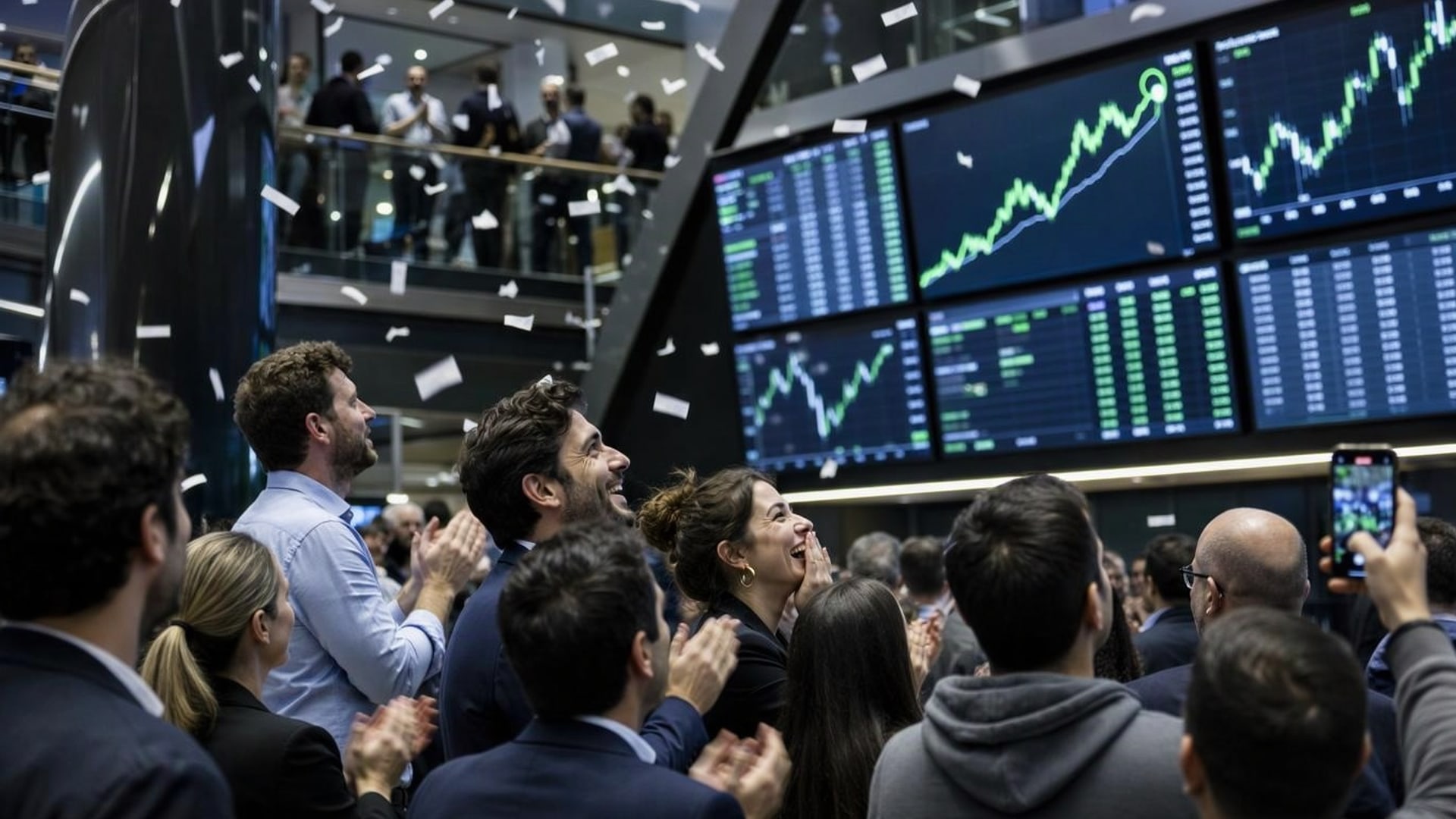
Update 19 November, 20:30 CET: Anthropic's shares have now traded. The first trade on Nasdaq came at about 11:48 a.m. New York time (17:48 CET) at $111.50, 34% above the $83 offer price, which put the fully diluted value at roughly $2 trillion. The share then gave back part of the gain: it reached $114.99 at its highest and fell to about $94; at 20:30 CET it was at $96.63, still 16% above the offer price.
Now that Anthropic's shares trade on the Nasdaq Global Select Market (first trade 19 November at $111.50), investors own part of a company whose directors are legally required to consider more than their returns. The offering, priced at $83 a share and worth $81.3 billion, is the largest on record. Its legal architecture is at least as unusual as its size.
A public benefit corporation
Anthropic is incorporated in Delaware as a public benefit corporation, or PBC. Under subchapter XV of the Delaware General Corporation Law, the directors of a PBC must balance three things: the financial interests of shareholders, the interests of those materially affected by the company's conduct, and the specific public benefit named in its certificate of incorporation. A director who makes that balance in good faith is protected from liability, and only shareholders holding a minimum stake may sue to enforce it. The company must report to shareholders on how it pursues the benefit at least every two years.
Three kinds of share and a trust
- Class A: the shares sold in the offering, one vote each.
- Class N: non-voting shares. The $26 billion placed privately with seven technology companies alongside the offering is in this class, so those commercial partners gain no votes.
- Class F: a share held for the seven co-founders that carries 50.1% of the total vote.
- Class T: a single share held by the Long-Term Benefit Trust, whose trustees have no financial interest in the company and who elect a portion of the board.
The effect is that ordinary shareholders cannot, by themselves, replace the board or change the company's course. That is disclosed prominently among the risk factors, which run to 94 pages. One existing investor's holding, Google's, is capped by agreement at 14.99%. The company has also committed 5% of its shares to a public benefit fund.
Nasdaq's listing rules permit companies to list with multiple share classes if the structure is in place before the listing; what they prohibit is reducing existing public shareholders' voting rights afterwards. A company in which a group holds more than half the votes may also rely on the exchange's “controlled company” exemptions from some board-independence requirements.
The disclosure trail
Anthropic announced a confidential submission to the Securities and Exchange Commission on 1 June. The registration statement on Form S-1 became public on 26 October and was amended on 2 and 10 November, when the price range of $70 to $78 was set, and again this week. Under the Securities Act the company and its directors are liable for material misstatements in that document; underwriters have a due-diligence defence.
The filing itself records the company's legal history: a $1.5 billion settlement of a copyright class action brought by authors, a dispute with the US government earlier this year over limits on military uses of its models, which led to a supply-chain-risk designation that a court then suspended, and a short export-control suspension of two models in June.
The cross-border retail offer
Up to 20% of the shares were set aside for private investors, and not only American ones. In the European Economic Area the offer was made in nine countries on the basis of a prospectus approved by the German regulator BaFin and passported to the other states under the EU Prospectus Regulation. In the United Kingdom it ran through RetailBook, a platform that connects offerings to retail brokers. Offers were also made in Canada, Australia, Japan and Switzerland under local rules. There is no second listing: the shares trade on Nasdaq only.
What to watch
Three things will test the structure: the first shareholder proposals at an annual meeting, any litigation over how the board has balanced mission and profit, and whether index providers that restrict companies with unequal voting rights admit the stock.
Background on the company is in Lexendia's profile “Anthropic: the company history”. Disclosure: this newsroom uses AI tools in its work, including Anthropic's Claude, which assisted with this article.
Sources
- Anthropic IPO Live Updates: ANT Debut, Pricing and Valuation
- Anthropic IPO Live Updates: ANT's first trading day
- Anthropic Sets IPO Range and Adds $26 Billion Private Placement
- Anthropic sets terms for $61 billion IPO
- When is the Anthropic IPO? Timetable and terms
- Anthropic (company overview and funding history)
- Anthropic: the company history
- The companies that build large language models
- Anthropic Stock Opens at $111.50 in Record-Breaking Nasdaq Debut
Lexendia is a legal information service, not a law firm. This is not legal advice.